Monge Capital brings deep, integrated expertise across multiple interconnected areas, including application writing, financial modeling, underwriting, capital stack strategy, due diligence, investor outreach, tax credit sales, and regulatory compliance. Our firm offers comprehensive, end-to-end support across the full project lifecycle, from initial feasibility assessment, to tax credit monetization. Monge Capital enhances project feasibility and optimizes capital stack efficiency, including the strategic layering of Garden State Commercial Property Assessed Clean Energy (C-PACE) financing.
Serving as a single point of contact, Monge Capital streamlines coordination among clients, lenders, financing partners, and the New Jersey Economic Development Authority (NJEDA), leading the preparation and submission of competitive applications while developing compelling financial narratives and impact analyses to support a cohesive and efficient funding process.
The Aspire Program is designed to support transformative commercial, mixed-use, and residential development projects that may not otherwise be financially feasible. To qualify, projects must demonstrate a clear financing gap and/or an expected below-market return, ensuring that incentives are targeted to developments that truly require public support. In return, the program provides competitive tax credit awards that enhance project viability, help close funding gaps, and enable developers to advance high-impact projects that contribute to economic growth across the state.
Eligibility Requirements
Project must demonstrate it is not economically feasible without Aspire support (per NJEDA analysis)
Must be located within a designated Incentive Area
Developer must contribute at least 20% equity
Project must deliver a net positive economic benefit to the State
Must meet minimum cost thresholds (varies by project type and location)
Project Award Caps
Up to 85% of eligible costs (max $120M) in select cities (e.g., Atlantic City, Trenton, Paterson)
Up to 80% of eligible costs (max $120M) in targeted municipalities (e.g., Camden, East Orange, New Brunswick)
Up to 60% of eligible costs (max $90M) for LIHTC projects or high-distress areas
Up to 50% of eligible costs (max $60M) for all other eligible projects
Transformative Project Caps
Same percentage tiers as above
Increased maximum award up to $400 million
Disbursement Structure
Tax credits are typically distributed over a 10-year period
Certain projects in designated areas (e.g., GRMs) may receive credits over 5 or 10 years
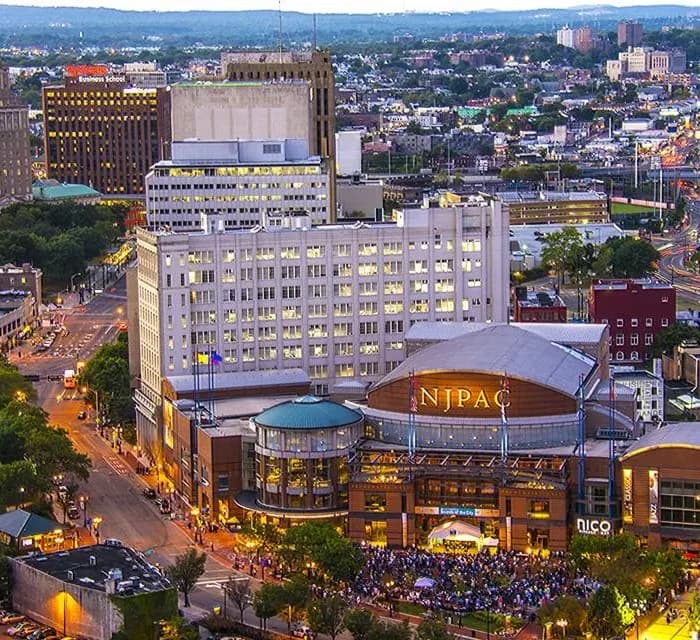
Monge Capital Transaction - NJPAC District Cooperman Center
Cultural Arts Facility Expansion (CAFE)
Overview
The program is designed to elevate arts and culture as a key sector of New Jersey's economy while attracting visitors to the state and its local communities. It supports the expansion of access to high-quality arts and cultural experiences and promotes equitable engagement by ensuring underrepresented and underserved communities can fully participate in and benefit from these investments.
Eligibility Requirements
Applicant must be a cultural arts institution that:
Owns or leases space in the facility
Operates the cultural arts facility
Award Amount
Tax credits awarded through a competitive application process
Up to 100% of eligible project costs
Minimum project size: $5 million | Maximum award: $75 million
Tax credits are transferable and can be sold
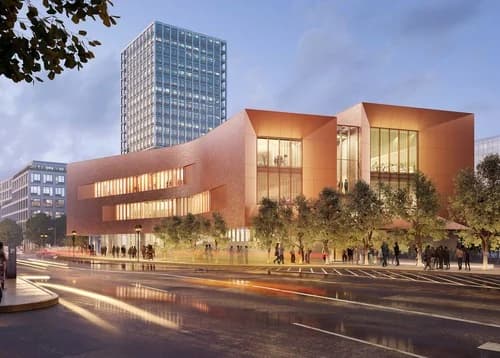
Monge Capital Transaction - New Jersey Symphony
Historic Property Reinvestment Program
Overview
The Historic Property Reinvestment Program is specifically designed to support the rehabilitation, reinvestment, and adaptive reuse of historic properties, helping preserve the state's architectural heritage while enabling productive new uses. The program provides tax credit incentives to improve project feasibility, with flexibility for certain developments, financing gap and equity requirements may be waived for smaller projects or those located in Government-Restricted Municipalities (GRMs).
Eligibility Requirements
Project must demonstrate it is not economically feasible without the tax credit
Must show a financing gap (except for smaller projects under $5M or those in GRMs)
Construction cannot begin prior to application submission (with limited exceptions)
Requires at least 20% equity contribution from the business entity (with certain exemptions)
Must meet minimum rehabilitation cost requirements
Project must qualify as a rehabilitation of a historic property
Residential projects must include rental housing with at least four units
Award Structure (Based on Rehabilitation Costs)
Up to 50% of eligible costs (max $8M) for projects outside incentive tracts or GRMs
Up to 60% of eligible costs (max $12M) for projects in qualified incentive tracts or GRMs
Up to 45% of eligible costs (max $50M) for projects involving a transformative property
Final award is based on total eligible rehabilitation costs
Monge Capital Transaction - Hotel Indigo Newark
Next New Jersey Manufacturing Program
Overview
The Next New Jersey Manufacturing Program is designed to drive significant capital investment in manufacturing while supporting job creation across the state and strengthening New Jersey's position as a leading manufacturing hub. It offers competitive, transferable tax credits that enhance project feasibility and liquidity, while encouraging long-term corporate commitment and sustained economic growth within the state.
Eligibility Requirements
Facility must be primarily (more than 50%) engaged in manufacturing activities
The following activities are not considered manufacturing:
Refurbishing or repairing goods
Retail or wholesale operations
Packaging activities
Software development
Resource extraction
Waste incineration
Agriculture (including indoor, outdoor, hydroponic, or aeroponic)
Award Amount
Tax credits of up to $150 million available to eligible manufacturing applicants
Award is based on new job creation and capital investment
Final award is the lowest of the following three calculations:
Award Calculation: 0.1% × capital investment × total number of jobs
Program Award Percentage Cap: Maximum of 25% of total capital investment
Program Award Cap: Maximum of $150 million
The final tax credit equals the smallest value among these three limits